
Eco-solvent printers
Eco-solvent printers are the usual choice for outdoor graphics where you need colour that holds on vinyl, banner and film. We supply print-only and print-and-cut configurations for sign shops, photo labs and print studios that need dependable daily production.
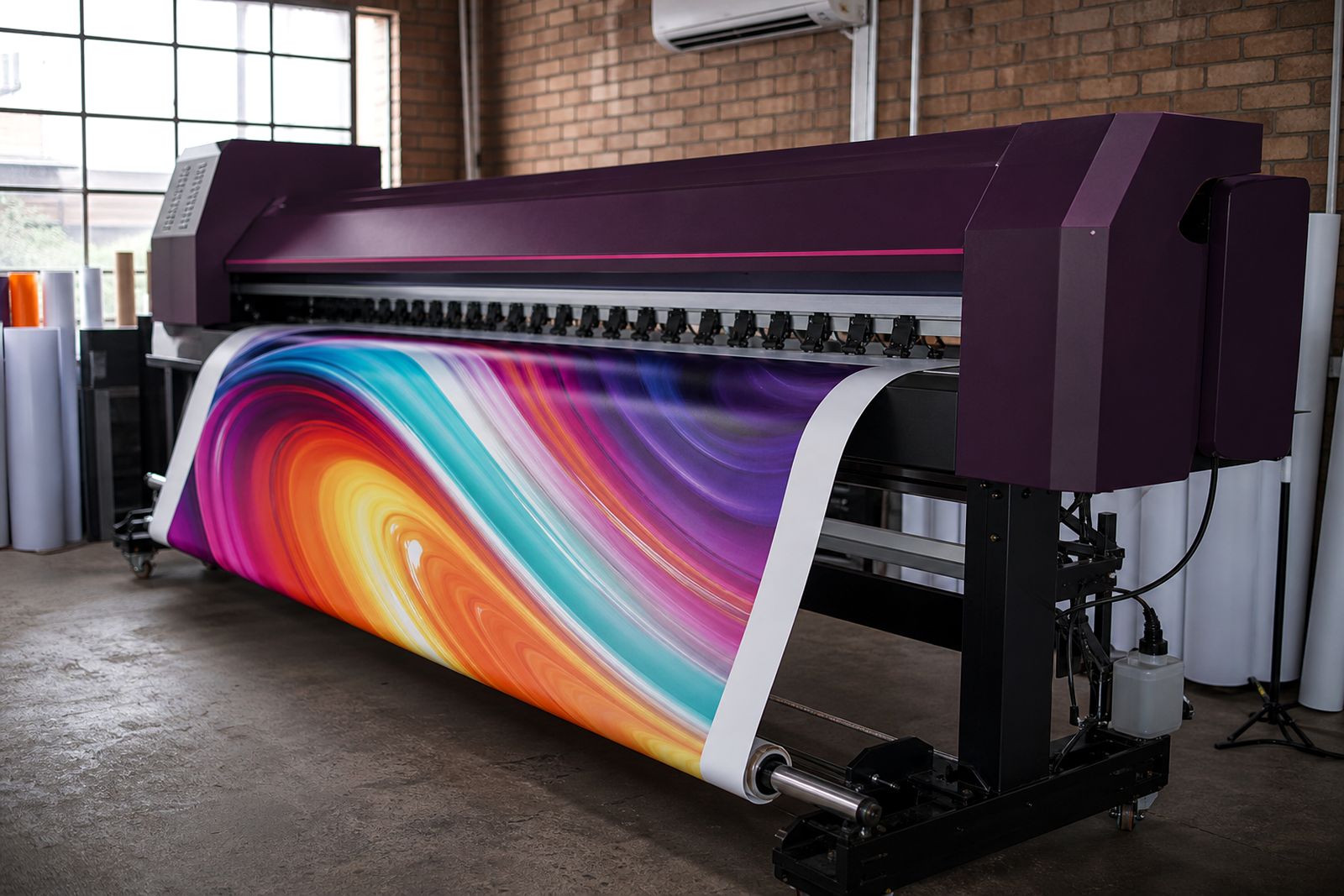
Built for outdoor graphics and daily sign work
Eco-solvent printing is used where the job mix leans toward self-adhesive vinyl, PVC banner, poster film, one-way vision and laminate-ready wrap media. The ink set bonds well to coated and uncoated sign substrates, giving a durable print surface for shopfront graphics, event panels, decals and vehicle applications. In a Gauteng shop this usually means a machine that starts most mornings on banner work and finishes the day on labels, short-run posters or wrap panels.
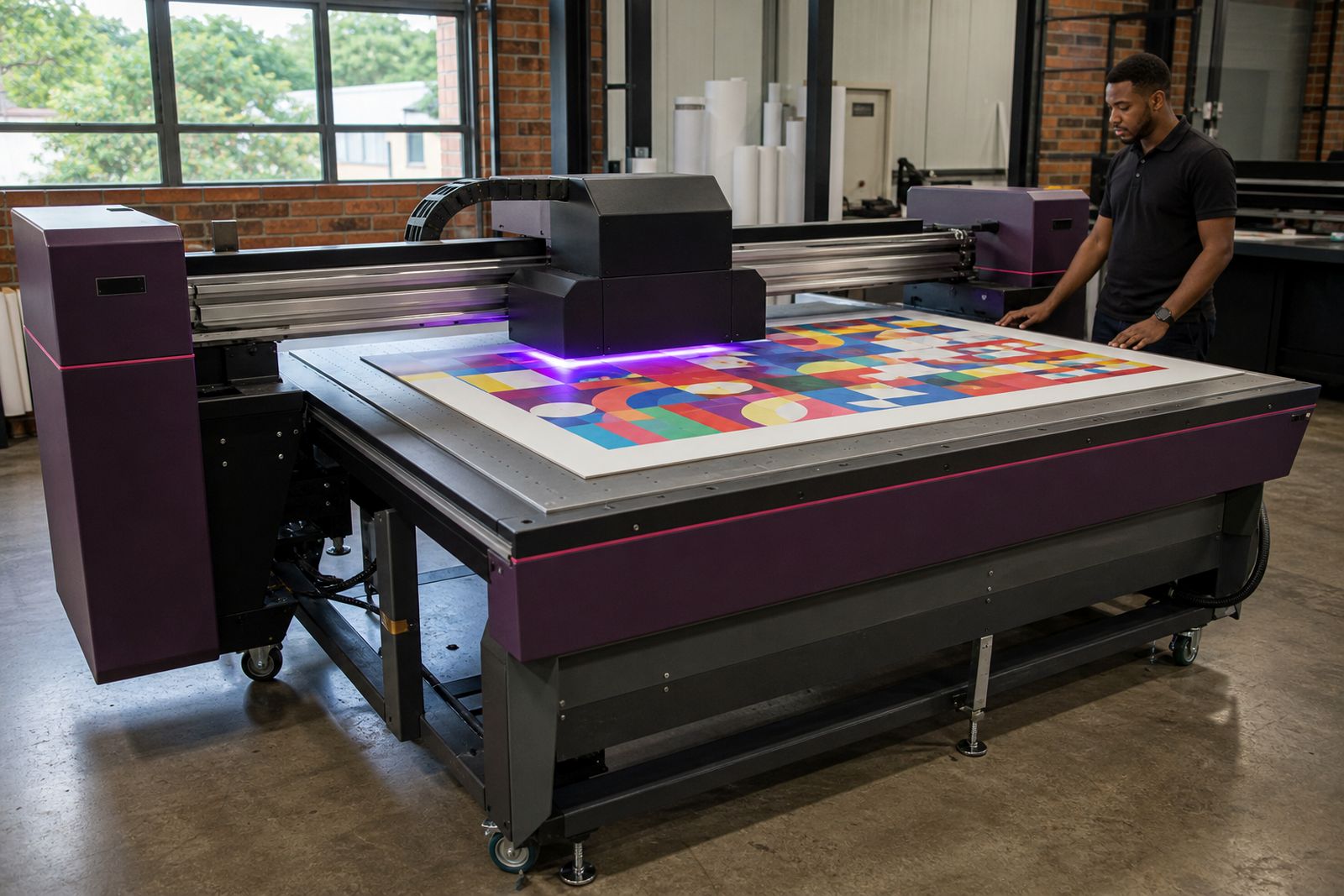
These printers suit businesses that need a broad media range without stepping into rigid board production. They are less suitable where the main work is direct print onto board, glass, metal or thick promotional items. For those jobs a UV platform is normally the better fit. If your work is mostly photographic paper and fine tonal proofing, an aqueous machine may be the cleaner route.
- Common output: banners, wall graphics, window vinyl, vehicle wraps and safety signage.
- Typical media widths: compact entry models, mid-width production units and full-width sign-shop machines.
- Usual users: sign shops, fleet branding teams, in-house marketing rooms and busy print studios.
Widths, configurations and real working limits
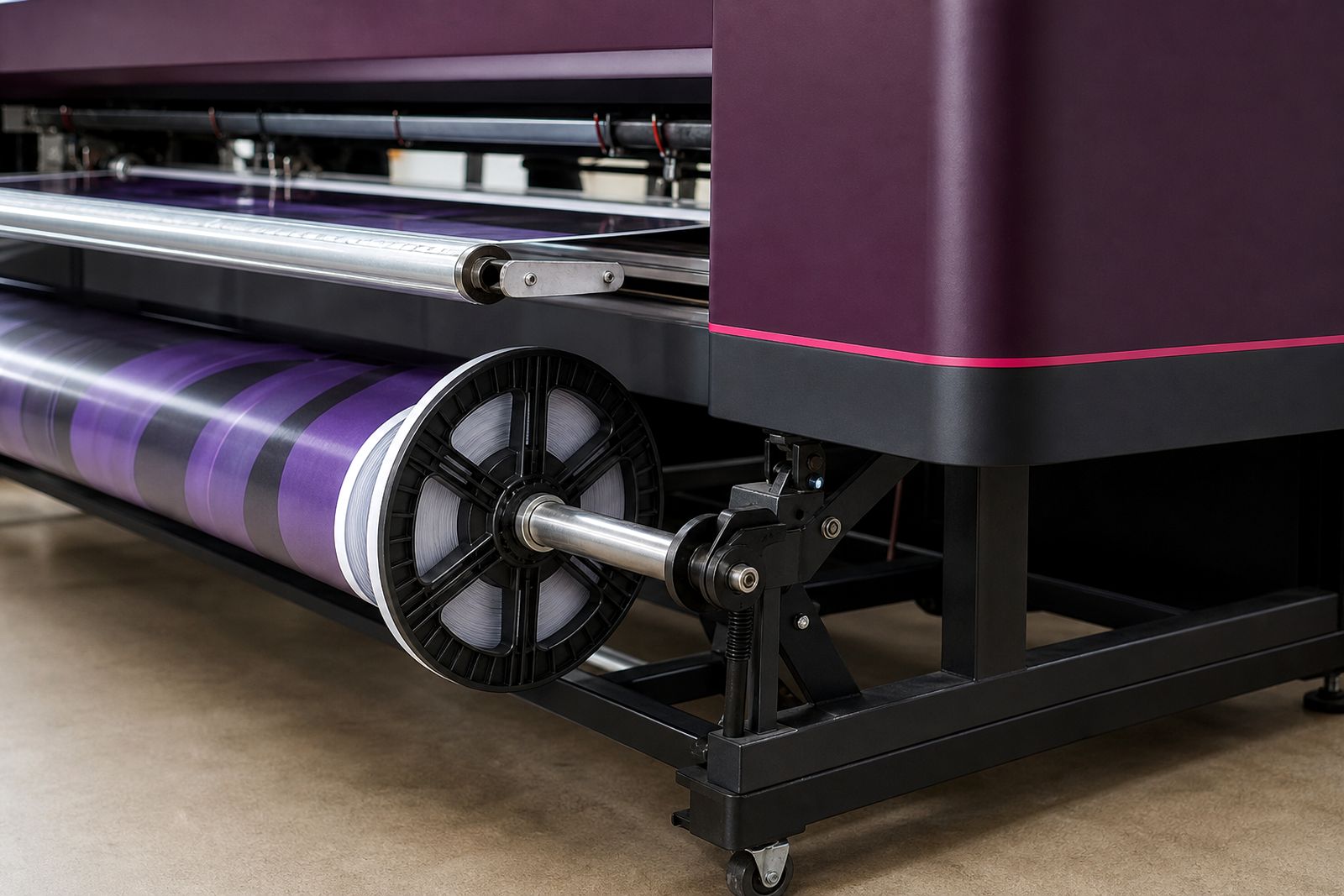
We place eco-solvent printers in several width classes, usually from compact units for lighter floor space through to full production widths for long banner runs. The right size depends on the media you buy most often, the lamination width already on your floor and the amount of unattended printing you expect overnight. A wider machine can open up better nesting on banner and wrap panels, but it also asks for more room around the take-up and loading side.
Configuration matters as much as width. Print-only models suit shops that contour cut on a separate device, while print-and-cut units fit smaller rooms where one operator handles short-run decal work. Fast production modes are useful for distance-viewed signage, but close-view wrap and retail graphics need slower passes and tighter profiling. There is no point buying headline speed you won't use if your sellable work needs cleaner gradients and steadier solids.
- Compact width units suit decals, posters, labels and short banner runs.
- Mid-width machines suit mixed sign work with vehicle graphics and retail vinyl.
- Full-width production units suit long banners, repeated panels and heavier weekly metreage.
- Print-and-cut systems save floor space on contour-cut sticker work.
Where eco-solvent earns its keep
In practice these machines pay their way when a shop runs a steady queue of outdoor-rated work on flexible media. Banner campaigns, contravision, promotional decals, municipal notice boards and laminated wraps all sit comfortably here. Print quality is strong enough for close-view retail graphics when the file prep, heat settings and media profile are right. For sign studios covering Pretoria, Midrand, Johannesburg and the East Rand, eco-solvent remains a sensible middle ground between low-cost poster output and the higher capital spend of wide UV equipment.
There are also cases where it is the wrong tool. Direct print onto rigid sheets is outside its lane. Very heavy texture stock, thick board and object printing belong elsewhere. If your schedule is mostly fine-art paper, proofing and photo output, eco-solvent can feel like the wrong chemistry for the room. We would rather match the platform to the work than push a machine into jobs it will always fight with.
Room, power and installation notes from Centurion jobs
Eco-solvent printers need a clean, stable room with enough space to load straight, walk both sides and keep media dry. In Highveld conditions dust is a real issue, especially near open roller doors and framing benches. Fine dust settles on media edges, encoder strips and capping areas, and that can show up as deflection, nozzle loss or small marks through solid colour. The machine area should be separated from sanding, cutting and board trimming where possible.
Power is standard mains supply, but the important part is stability. Sudden interruptions during printing, cleaning or shut-down cycles can waste media and affect head condition. Shops that deal with regular load-shedding normally plan protected power for the print line and RIP station. Ventilation matters too because operators spend long hours beside the printer.
- Allow floor space for front output, rear loading and service access on both ends.
- Keep media in a dry area away from direct sun and large temperature swings.
- Plan stable mains power for the printer, take-up and RIP workstation.
- Keep framing dust, trimming debris and aerosol sprays away from the print zone.
Care, consumables and the parts that should not be ignored
Daily care on an eco-solvent printer must be done properly. The operator should check nozzle condition, wipe around the head area where required, keep pinch rollers and grit rollers clean and load media square. Weekly tasks often include cleaning around the capping station, checking wipers and inspecting waste ink routing. When prints start to band or colours drift, the cause is often routine maintenance skipped for a few days rather than a major fault.
We supply bulk inks, printheads, dampers, capping parts, maintenance items, media and RIP software that fit this category of machine. Set-up usually includes calibration and colour profiling on the media types you actually run, so the printer is left on a profile that holds skin tones and deep blues properly. Training at handover is practical and shop-based because a printer only earns when the operator knows what normal looks like and what needs attention before a small issue turns expensive. That's the part many shops learn late.
What to send with your enquiry
The best starting point is a short note on the work you produce now and the work you want the machine to take on over the next stretch of trading. Width, print volume and finish standards matter more than headline speed. If you already run laminating and cutting equipment, tell us the widths on your floor so the printer does not create an awkward bottleneck.
When you send details through our contact form include the basics below. That lets us point you toward a print-only or print-and-cut platform, the right ink arrangement and the media path that suits your shop.
- Main products: banners, wraps, decals, posters, labels or mixed sign work.
- Preferred media widths and approximate monthly metreage.
- Whether you need print-only or integrated contour cutting.
- Room conditions, available floor space and local power setup.
- Current finishing equipment such as laminators and cutters.
- Whether set-up, colour profiling and operator training are required on site.
What our Wide-format Printing customers say
Verified Google reviews
Questions we get asked
Can eco-solvent prints be used outdoors?
Eco-solvent output is commonly used for outdoor signage, banners and vehicle graphics, especially when paired with the correct media and lamination where needed.
Is eco-solvent the right choice for rigid board printing?
Eco-solvent printers are meant for flexible roll media. If your work is mainly direct print onto rigid substrates, a UV platform is the better match.
Do I need profiling when buying a new eco-solvent printer?
Proper profiling helps the printer hold consistent colour on the media you actually run. It is especially useful when a shop handles wraps, retail panels and repeat brand colours.
Also worth a look
Tell us about the job
Send sizes, materials and where you are through our contact form, and we will come back with the practical options.
Open the contact form