Aqueous printers
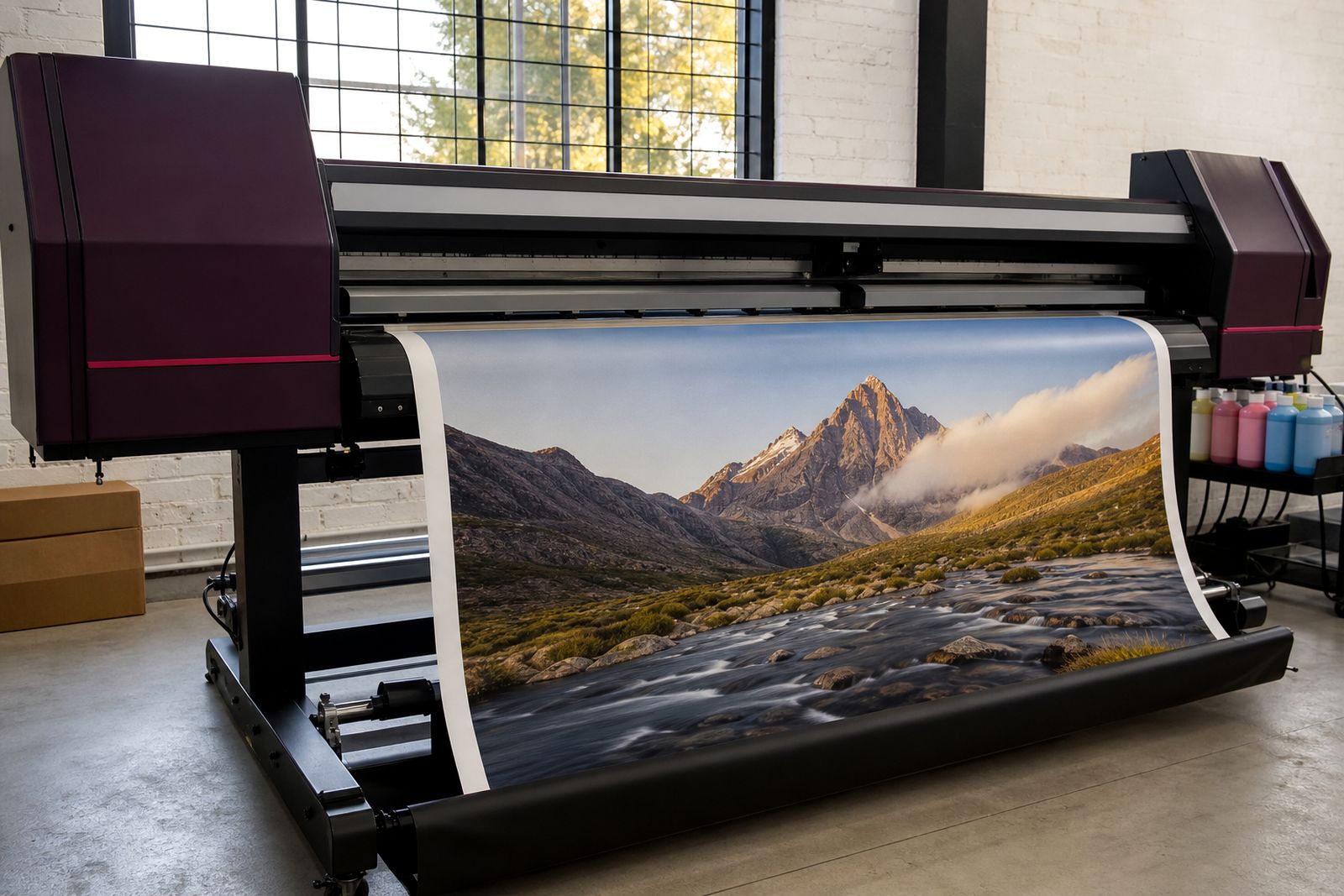
Aqueous printers are built for photo output, proofing and fine-art work where tonal control matters more than outdoor durability. We supply systems for labs, studios and galleries, with set-up, profiling and practical guidance on media, inks and daily care.
Built for photographic and fine-art output
An aqueous printer uses water-based inks on coated papers, photo papers, canvas and selected film media. The strength of this print method is image quality: smooth skin tones, controlled neutrals, fine shadow detail and a surface finish that suits display prints, portfolio work and limited-run exhibition pieces.
In a working studio or lab, these machines usually sit where the main demand is for indoor prints that need accurate colour rather than weather resistance. They are commonly chosen for portrait enlargements, wedding work, school photography, product proofs, wall decor samples and gallery prints where the substrate carries much of the final look.
- Best suited to photo papers in gloss, lustre, satin and matte finishes
- Works well on fine-art cotton papers and selected coated canvas
- Good for proofing where colour consistency between jobs matters
- Less suitable for outdoor signage or unlaminated handling-heavy graphics
Widths, roll options and practical limits
Aqueous printers are generally selected by print width and ink configuration. Smaller units suit portrait studios and framing shops with moderate daily volume, while wider models fit production labs printing panoramas, mounted displays and long-run photo batches. Common carriage widths start around 610 mm and move through 914 mm, 1 118 mm and 1 524 mm classes.
Roll weight, take-up options and drying behaviour all affect day-to-day output. Heavy fine-art stock can run beautifully, but only when the feed path and platen settings match the media. Some papers print with deep blacks and very little fuss, others need slower passes and more careful handling at the output side or you get edge scuffing and a bit of curl.
- Typical media widths: 610 mm, 914 mm, 1 118 mm and 1 524 mm
- Usual applications: enlargements, proofs, portfolios, décor panels and gallery runs
- Working limits: lower resistance to water and abrasion than solvent or UV output
- Best results rely on coated media matched to the ink set and profile
Where aqueous fits, and where another printer type makes more sense
For indoor photo display, reproduction work and premium paper output, aqueous is often the right call. It handles gradients and fine detail in a way that print studios notice immediately, especially on flesh tones and neutral greys. If your work leaves the studio as framed art, mounted prints or protected photo pieces, the finish quality is usually the deciding factor.
There are jobs where another print platform is the better tool. If you need outdoor decals, pull-up banners, board graphics, vehicle work or direct printing onto rigid materials, this is not the category to force into the role. It can be done only with too many compromises, and that tends to show in handling life and substrate choice.
When you enquire through our contact form, it helps if you tell us whether your print mix is mainly photo paper, fine-art paper, canvas or proofing stock. We can then point you to the size and ink arrangement that matches the real work rather than a brochure claim.
Space, climate and installation notes
These printers like a clean room, steady temperature and controlled humidity. On the Highveld that matters more than many shops expect, because dry winter air and dust both affect nozzle health, paper handling and static. A printer placed near an open roller door or a framing bench that throws lint into the room will need more intervention than one kept in a cleaner production area.
Allow enough space for loading rolls, trimming output and accessing service covers. You also need a stable table or stand, proper mains supply and room for the host computer that runs the RIP software. If you print long panorama work, leave clear output space so the media does not drag or pick up dust as it exits.
- Keep the printer away from direct sun and dusty traffic paths
- Maintain steady room conditions for paper stability and nozzle performance
- Allow front and rear access for loading, maintenance and media changes
- Plan for a RIP workstation and storage for sealed media rolls
Care routine, printheads and media handling
Aqueous printers reward regular use and sensible housekeeping. The printheads, capping area and wiper system need routine attention, especially where fine dust settles overnight. Media should stay wrapped until needed, then acclimatise in the print room before use. Fine-art papers in particular can react to moisture swings, which shows up as skewing, head strikes or uneven feed.
Daily checks are straightforward but they cannot be skipped for long without consequences. A short nozzle check in the morning, clean handling at the platen and correct storage of partly used rolls goes a long way. If a lab runs mixed papers all week the operator should keep separate profiles and paper settings rather than trying one compromise setup for everything.
We can supply printheads, inks, maintenance items and the media types that suit this class of machine, along with colour profiling and operator training for studios that need tighter consistency across repeat jobs.
What to send with your enquiry
The most useful enquiries include a few production details. Send the information that shows what the printer will be doing on a real Monday morning. That lets us match width, speed, ink set and media path to the work your studio or lab actually runs.
- Your preferred print width, such as 610 mm, 914 mm or 1 524 mm
- Main output types: photo enlargements, proofs, canvas, fine-art or mixed work
- Approximate monthly volume in square metres or rolls
- Media weights and finishes you plan to run most often
- Whether you need RIP software, colour profiling and operator training
- Your town and whether delivery is to a ground floor shop, studio or lab
If you are comparing aqueous with eco-solvent or UV, say so in the message. We will keep the recommendation aligned with your media and output use and match the print method to the jobs it suits.
What our Wide-format Printing customers say
Verified Google reviews
Questions we get asked
Are aqueous prints suitable for outdoor use?
They are intended for indoor display, framed work, proofing and protected print applications where image quality on coated media is the priority.
Can these printers handle fine-art papers and canvas?
They can, provided the media is compatible with the feed path and ink set. Heavier stocks often need the correct platen gap, profile and handling method to avoid scuffing or skew.
What should I include when asking for a recommendation?
Send your required print width, main media types, monthly volume, preferred finishes and whether you need RIP software, profiling or training. Your town helps with delivery and installation planning too.
Also worth a look
Tell us about the job
Send sizes, materials and where you are through our contact form, and we will come back with the practical options.
Open the contact form