Media and consumables
The right media keeps colour stable, take-up clean and finishing predictable across long print runs. We stock common roll media and day-to-day consumables for eco-solvent, aqueous and UV print rooms in Centurion and across South Africa.
Media that matches the printer and the job
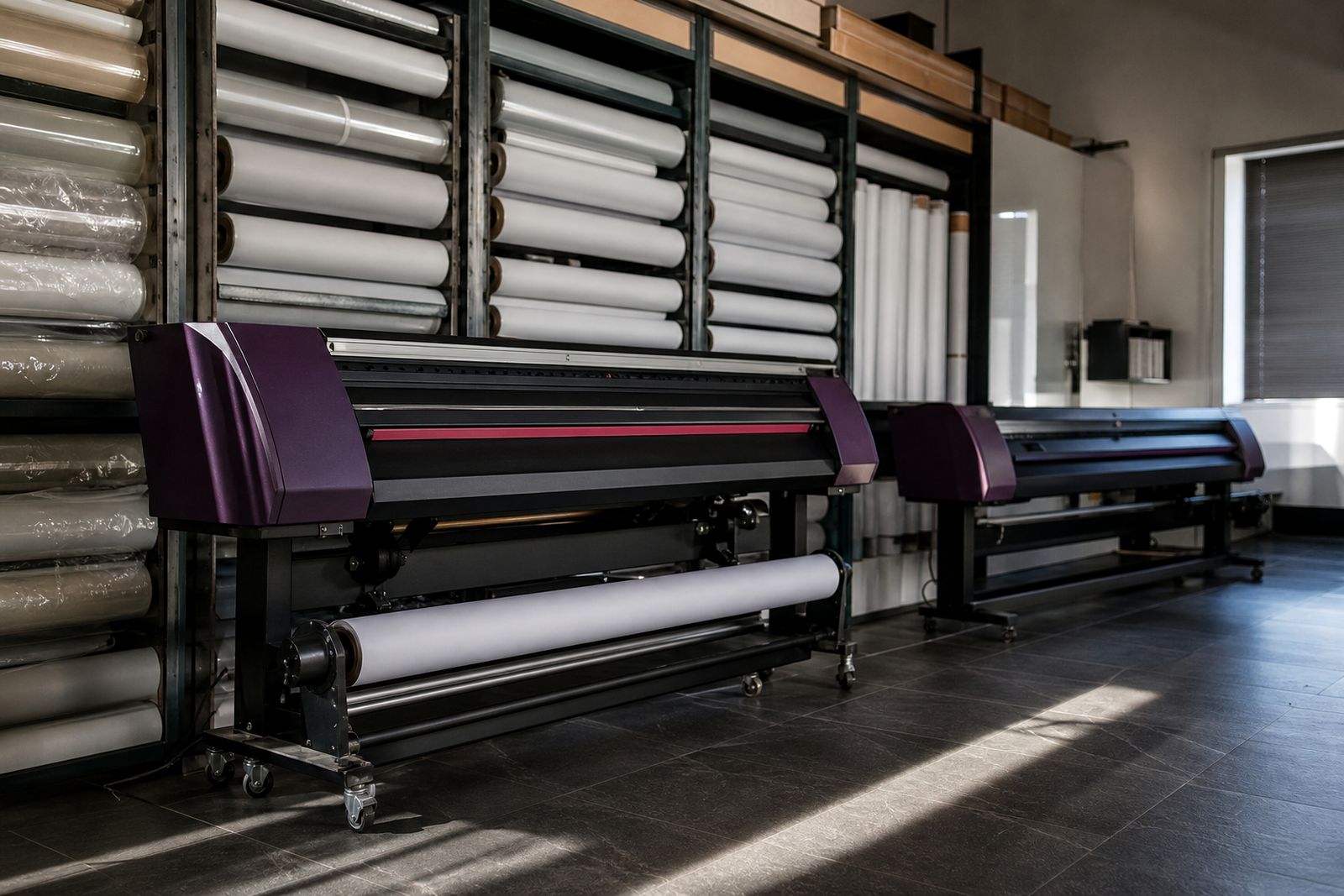
Media and consumables cover the roll stock you print onto as well as the cleaning items that keep production moving. Self-adhesive vinyl, banner material, coated photo papers, canvas and the practical items used around the machine such as cleaning swabs, wipes, flushing fluids and maintenance cartridges all form part of a workable print-room supply where applicable.
Each printer family has a workable range, and the media has to suit the ink set, heater arrangement, take-up tension and final use. A glossy photo paper that runs well on an aqueous machine will not suit an outdoor banner job, and a heavy blockout banner needs more pull and drying than a light indoor poster film. That is why we ask about the printer model, print width and the work you actually send out the door.
- Self-adhesive vinyl for signage, labels and promotional graphics
- Frontlit and blockout banner materials for indoor and outdoor use
- Photo papers in gloss, satin and lustre finishes
- Canvas for framed décor, display work and gallery-style prints
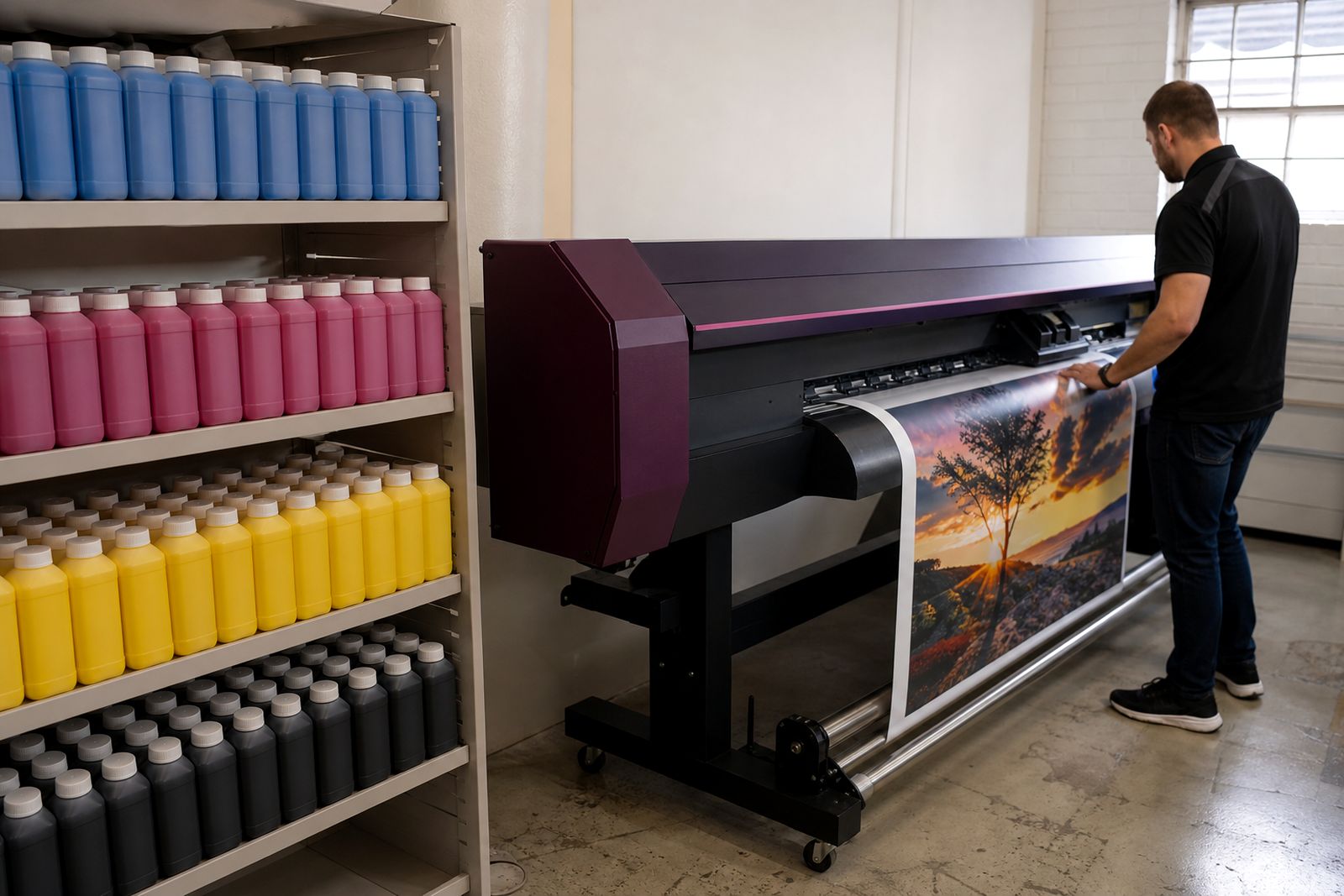
- Cleaning consumables for printhead care and routine maintenance
Widths, roll formats and working limits
Most media is supplied in roll widths that line up with common wide-format machines, usually from 610 mm up to 1,520 mm, with selected lines available wider. Roll lengths vary by product. Vinyls and banners are commonly packed in 30 metre or 50 metre rolls, while photo papers and canvas often run shorter depending on gsm and coating thickness.
Working limits matter more than the catalogue name. Heavy media can curl at the edges, some low-cost films show liner memory on a take-up reel, and coated papers can mark if pinch pressure is wrong. With eco-solvent printing, heaters must be set for proper ink anchoring without over-softening thinner films. With aqueous work the coating and drying path are the main concern. UV media has to tolerate lamp exposure and maintain a flat print surface, otherwise small text and solid fills can show banding or strike marks.
- Common roll widths: 610 mm, 914 mm, 1,067 mm, 1,270 mm and 1,520 mm
- Common roll lengths: 15 metres, 30 metres and 50 metres
- Typical vinyl film thickness: 80 to 120 micron
- Typical banner weight: 440 to 510 gsm
- Typical photo paper weight: 180 to 260 gsm
- Typical canvas weight: 280 to 400 gsm
Where each media type fits best
Self-adhesive vinyl suits decals, window graphics, mounted boards and general sign work. Smooth and lightly textured applications usually perform well when the adhesive matches the surface and the expected removal period. Short-term removable work benefits from a removable adhesive build matched to the job. Banner material works well for event branding, hanging signs and roadside promotions. Rigid flat presentations and premium interior graphics usually call for a different media choice.
Photo papers are aimed at presentation prints, proofing, retail graphics and photographic output where detail and tonal smoothness count. They do not like damp storage and they are a poor match for rough handling on site. Canvas suits stretched frame work and decorative pieces, though very fine technical drawings can soften slightly on a woven surface. Cleaning consumables belong in every print room because blocked nozzles, ink mist and dried residue cost more than the maintenance items do, that's the plain truth.
If you are printing long outdoor runs, tell us whether the work will be laminated, hemmed, welded or eyeletted. Those finishing steps affect the media choice just as much as the ink does.
Storage, loading and print-room conditions
Media performs best when it is stored level, kept sealed until use and allowed to settle to room conditions before loading. In Gauteng, dry winter air can build static on films and papers, while dusty workshops can mark adhesive edges and contaminate pinch rollers. A clean loading area helps far more than people think. Rolls should be supported correctly on the spindle and aligned before a long unattended print run starts.
For larger printers, floor space around the front and back of the machine matters. A 1,520 mm roll on a take-up system needs room for loading, trimming and safe movement. Banner and canvas can also gain or lose tension across a roll if they are stored badly or left standing open for too long.
- Keep unopened rolls in original wrapping until needed
- Store upright only if the product packing allows it, otherwise store level
- Let cold stock acclimatise before printing
- Keep media away from direct sun, damp floors and excessive dust
- Use clean gloves on coated papers and canvas when handling finished prints
Care items that keep print quality steady
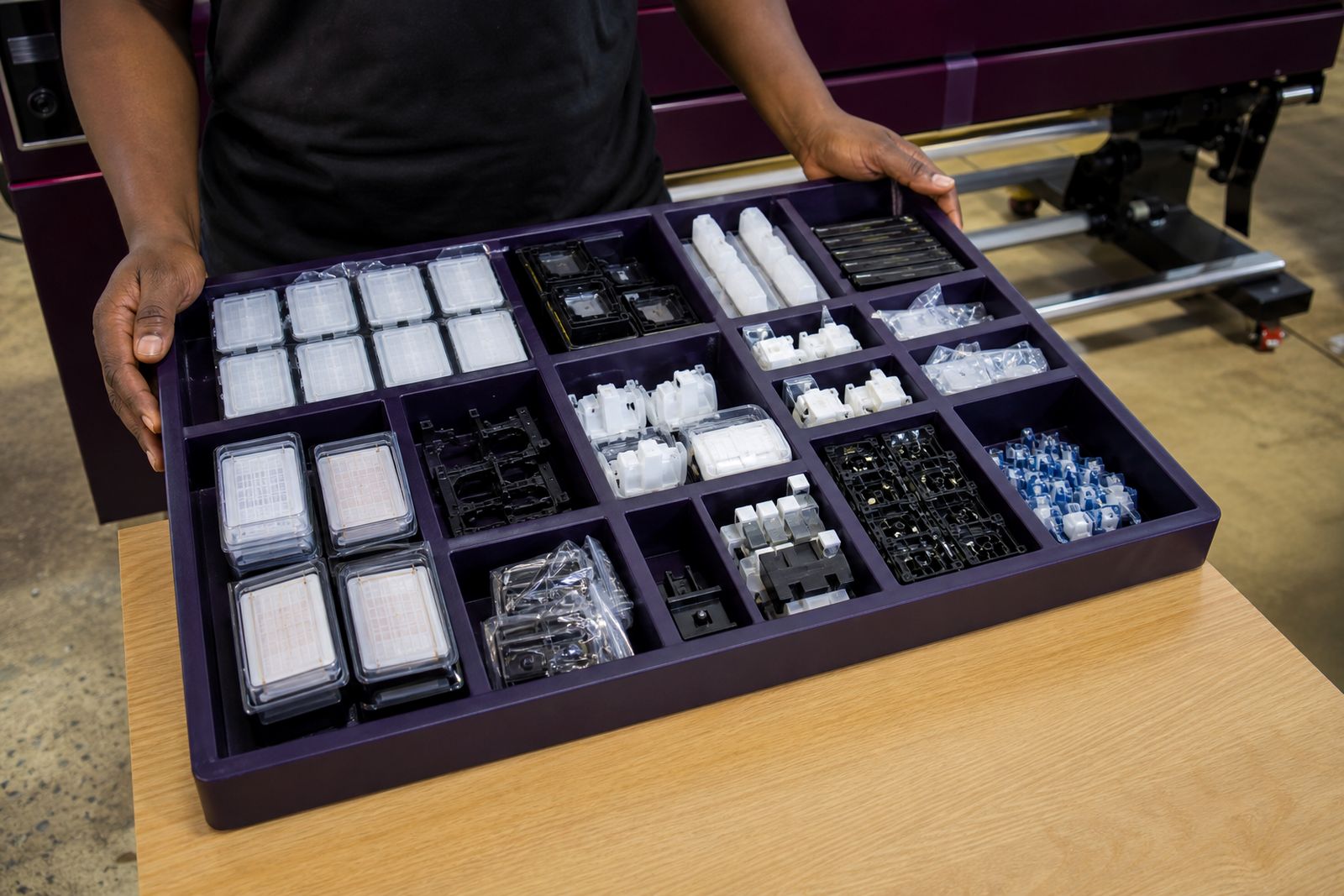
Maintenance consumables help keep print quality steady. Cleaning swabs, lint-free wipes, capping station fluids, flushing solutions and waste ink items all play a part in stable output. When the wrong wipe sheds fibres or a fluid is not suited to the ink system, small problems build into nozzle loss and poor colour consistency.
Print rooms that change media often usually need a tighter cleaning routine because adhesive dust, paper coating particles and general shop dirt collect around the carriage path. If your shop runs near an open roller door, on a busy industrial road or in a shared fabrication space, mention that when you enquire. It helps us point you to the right maintenance consumables and realistic stock quantities.
Details to send with your enquiry
When you contact us through our contact form, include the printer type, print width and the material you are trying to replace or improve on. If you know the ink set, media width, finish and target use, add that too. Details about lamination, mounting, stretching or welding save a lot of guesswork.
For cleaning items, tell us what symptoms you are dealing with, such as recurring nozzle drop-out, edge strikes on heavier stock, paper feed skew or contamination near the capping area. If the issue is media related, say whether the trouble starts at loading, during drying, on take-up or later in finishing. A couple of plain production details usually gets to the real cause much faster.
- Printer model and maximum media width
- Ink type: eco-solvent, aqueous or UV
- Media required: vinyl, banner, photo paper, canvas or maintenance item
- Roll width, finish and approximate quantity
- Indoor or outdoor use, plus any finishing method
- Delivery town and whether access requires smaller vehicle handling
What our Wide-format Printing customers say
Verified Google reviews
Questions we get asked
Can one roll media type work across every printer?
Not reliably. The ink set, heater layout, feed system and print purpose all matter, so media should be matched to the printer and the job.
Do you stock cleaning consumables as well as printable media?
We handle day-to-day maintenance items used around wide-format printers, including cleaning products suited to routine printhead and carriage-area care.
Can you help if prints look fine at first but fail during finishing?
Tell us whether the problem appears during lamination, mounting, welding, hemming or stretching so we can narrow it down to the media build, coating or print conditions.
Also worth a look
Tell us about the job
Send sizes, materials and where you are through our contact form, and we will come back with the practical options.
Open the contact form