

Eco-solvent bulk inks
Eco-solvent bulk inks lower cartridge change frequency and give steadier running on busy wide-format printers. We supply ink for compatible systems, flushing fluid, and practical help with batch changes, set-up and day to day handling.
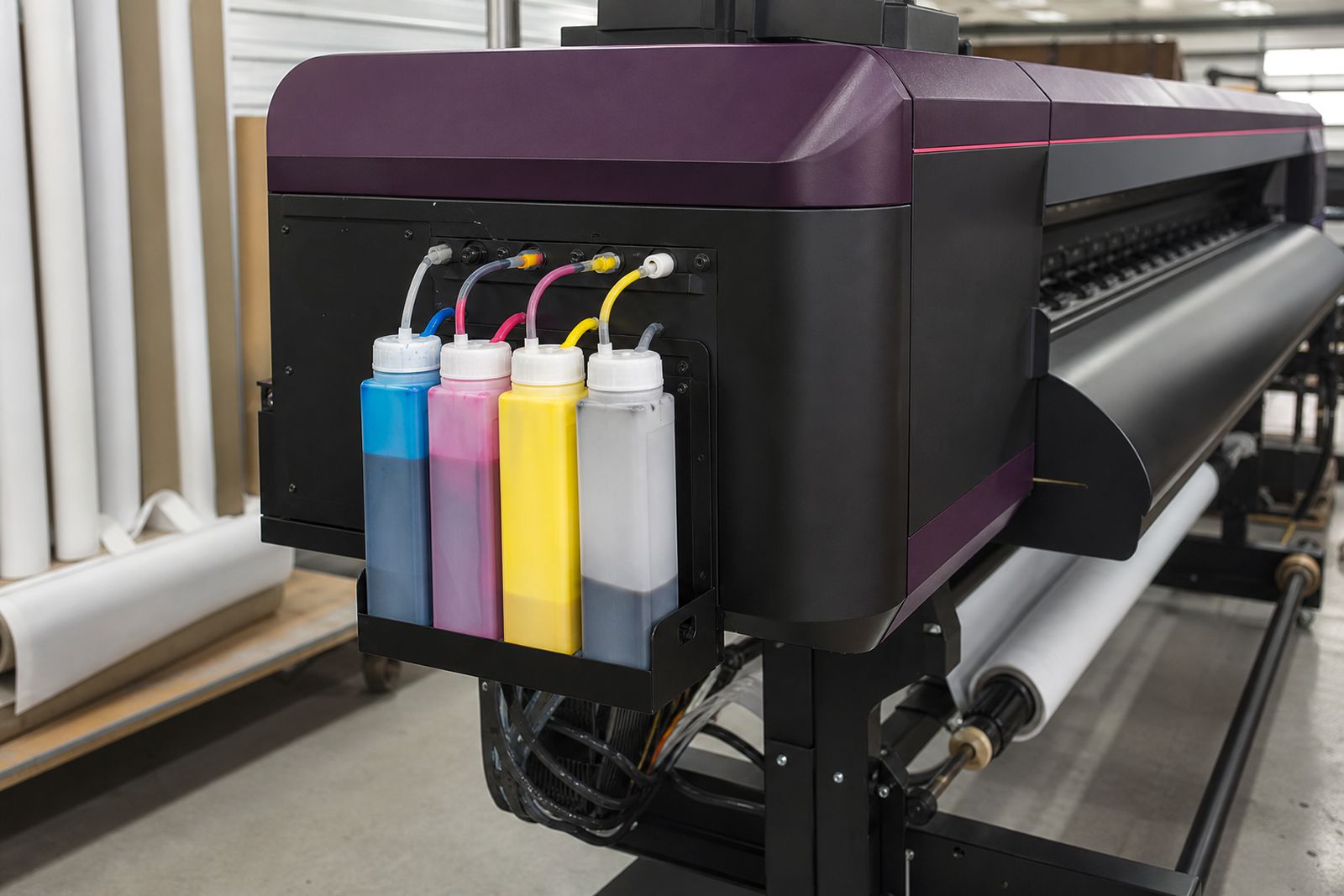
Bulk ink systems in day to day production
Bulk eco-solvent ink feeds a printer from larger bottles or bags instead of small cartridges. In a sign shop or print studio that runs long vinyl, banner or poster work, that means fewer stops for ink changes and less packaging moving through the floor. It also makes ink cost per litre easier to track across the month, which matters when jobs are priced tightly.
These inks are used on compatible eco-solvent wide-format printers for indoor and outdoor graphics on coated and uncoated media intended for solvent printing. The system has to match the printer ink line, damper arrangement, capping station condition and the RIP profile in use. If one of those parts is off, colour drift and nozzle loss show up readily, especially in dry Highveld air.
- Suited to regular production volumes and repeatable media sets.
- Useful where long runs make cartridge swaps a nuisance.
- Available with matching flushing fluid for changeover and maintenance.
- Best handled with colour profiling after installation or ink batch changes.
Sizes, colour sets and working limits
We supply eco-solvent bulk inks in production-friendly pack sizes, commonly 1 litre and larger containers where the printer and feed system support them. Standard process sets usually include CMYK, with light colours or spot options on some machines. The right choice depends on the printhead type, hose material, chip system if fitted, and the media range you print every week.
Match the ink to your head type and solvent chemistry before ordering a bulk pack. A printer set for one solvent chemistry may not tolerate another without line flushing, fresh dampers or profile changes. Some older machines run acceptably on short test work but become unstable on full-shift output. Machines with intermittent nozzles, failing pumps or swollen ink lines need repairs before bulk ink can run properly.
- Common pack sizes: 1 litre and selected higher-volume containers.
- Typical colour sets: CMYK, with light colours on compatible printers.
- Use temperature: generally stable around 18 to 28 degrees Celsius.
- Storage: cool, dry room away from direct sun and sealed when not in use.
- Working limit: only for printers confirmed as compatible with the ink chemistry and feed method.
Where eco-solvent bulk inks fit well, and their practical limits
Bulk eco-solvent ink suits print rooms making signage, wall graphics, labels, display panels, banner work and vinyl output where a consistent media range is already in place. It is a good match for operators who want fewer interruptions during longer runs and a more predictable consumable cost over time.
Bulk ink suits selected machines with compatible ink systems and stable mechanical condition. Photo-led aqueous printers need the correct water-based ink set, and UV printers need UV-curable ink built for that curing system. We do not sell plasma, routers or lasers, and those processes sit outside this product range completely. If your work depends on very fine photographic neutrals on papers designed for aqueous output, an eco-solvent conversion is usually the wrong decision.
There is also a practical limit on mixed, neglected fleets. Where one printer is running clean and another has old solvent residue, hardened caps and weak suction, shared bulk stock will not make both behave the same. That calls for mechanical attention first, with service work on caps, suction and old solvent residue before any ink change.
Installation needs and print room conditions
A sound bulk ink installation starts with the printer condition, not the bottle size. Ink lines, seals, dampers, capping station parts and pumps need to be inspected so the feed path can hold proper negative pressure. In Centurion and across Gauteng, fine dust gets into open bottles and service bays easily, so lids, filters and clean decanting matter more than many operators expect.
The print room should be stable enough for solvent printing and colour work. Large swings in temperature affect viscosity and nozzle behaviour. If a machine sits next to an open roller door or gets afternoon heat through glass, colour can wander from one shift to the next, and that is often blamed on the ink when the room is the real issue.
- Clean bench space for filling and line work.
- Controlled room temperature and moderate humidity.
- Good housekeeping around media dust and vinyl trim.
- Fresh profiles or recalibration after a chemistry change.
- Operator access to routine head cleans, nozzle checks and agitation where required.
Flushing, batch changes and colour consistency
Flushing fluid is used when moving from one compatible eco-solvent ink set to another, when clearing storage residue, or when a printer is being prepared for a controlled restart. The aim is to clean the line and keep chemistries separate so drying, adhesion and colour density stay stable. A rushed changeover can leave you chasing random casts for days.
Colour consistency between batches depends on three things working together: the ink itself, the printer condition, and the profile. Even with a stable supply, a worn head or weak cap can push one colour out of line. For shops that reprint panels or branded work often, a fresh profile after major maintenance or an ink change is usually worth the interruption. It saves far more waste down the line.
Keep batch records near the machine, note the media used, and hold a dated drawdown or control print. That small habit helps separate ink variation from mechanical faults when a problem appears later.
What to tell us when you enquire
The most useful enquiry includes the printer model, head configuration, current ink type and whether the machine already runs a bulk system. Tell us what you print most often, the media you keep on the floor, and whether the issue is cost, colour consistency, nozzle stability or downtime during long runs. If there has been a recent head swap, pump change or profile update, include that too.
We can also help with flushing fluid, printheads, spares, RIP software, set-up and colour profiling where the machine and job mix call for it. Use our contact form and include clear photos of the ink bay, dampers or a nozzle test if the printer is acting up. That gives our team a proper starting point rather than guessing from a symptom list.
- Printer model and installed colour set.
- Current ink arrangement, cartridge or bulk.
- Main media types, such as vinyl, banner or film.
- Any recent service work or parts changes.
- Whether you need ink only, flushing, or a full set-up review.
What our Wide-format Printing customers say
Verified Google reviews
Questions we get asked
Can I change from cartridges to bulk ink on any eco-solvent printer?
The printer has to suit the feed system and ink chemistry, and the condition of lines, dampers and caps matters. Some machines need parts work and flushing before the change is sensible.
Will bulk ink fix colour drift on its own?
Not always. Colour drift can come from profiles, room conditions, worn service parts or weak nozzle performance. Ink works as part of a chain that also includes profiles, room conditions and nozzle performance.
Do I need flushing fluid when changing batches?
A normal batch change within the same confirmed ink set does not always need a full flush, but a chemistry change or uncertain history usually does. We will advise from the printer details and current set-up.
Also worth a look
Tell us about the job
Send sizes, materials and where you are through our contact form, and we will come back with the practical options.
Open the contact form