

Inks
Ink choice affects colour, drying, maintenance and the parts your printer wears through over time. The right choice depends on the ink family you run, and on what to consider before changing from one type or supply format to another.
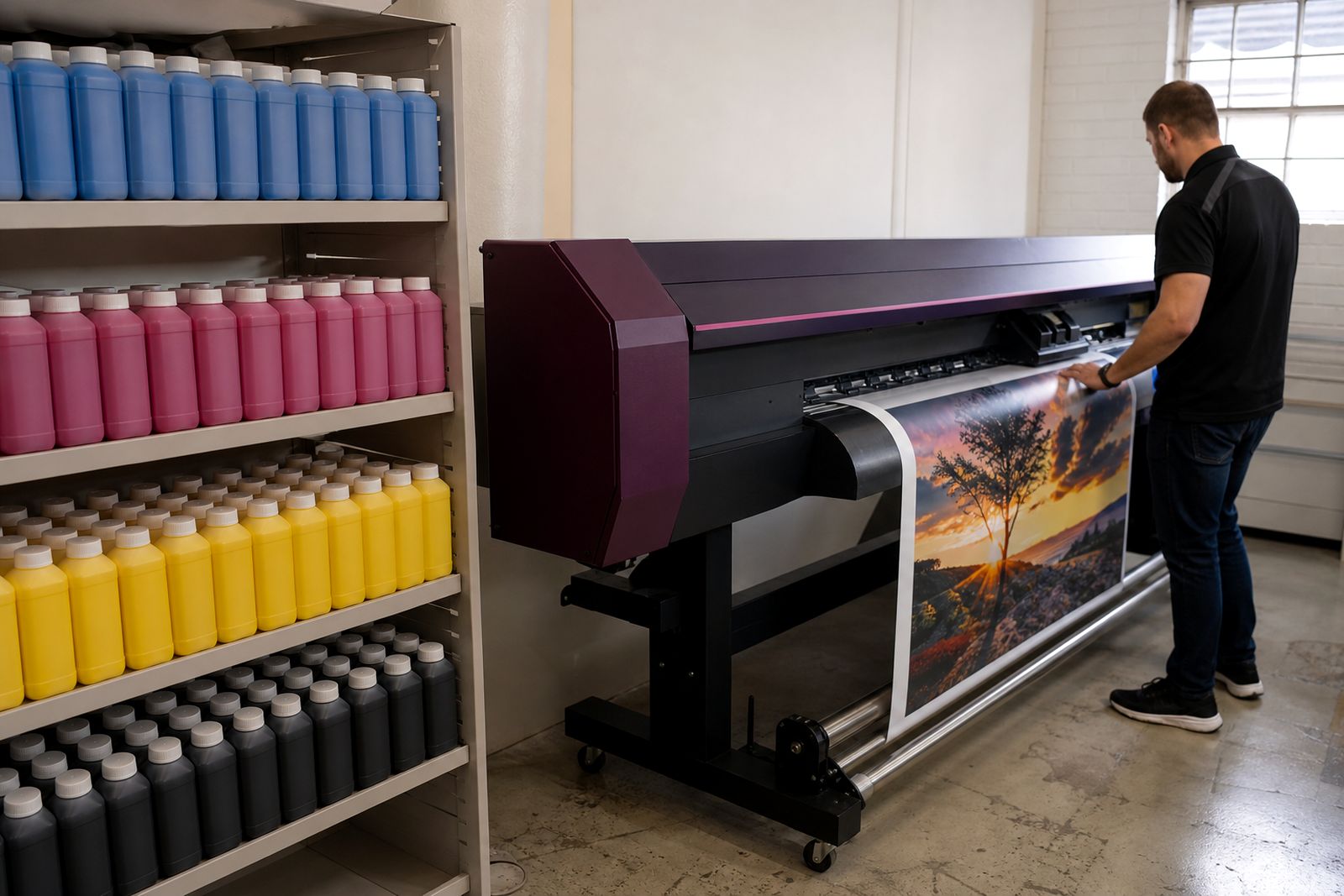
Ink supply for sign shops, labs and studios
We supply inks for wide-format printers used in signage, photographic output and general production work. That includes eco-solvent, aqueous and UV chemistry, with stock arranged around the print system rather than vague colour names that cause mistakes on the floor.
Some shops buy ink with a new printer, others need a steady replacement line for existing machines in Centurion, Gauteng and out to the rest of the country. In both cases the important point is matching the correct chemistry, bag or cartridge format, colour set and chip or tank arrangement to the machine you already run.
- Bulk ink systems for lower cost per litre on regular production volumes.
- Cartridge-based supply for printers designed around sealed consumables.
- Standard process sets such as CMYK, with light colours or specialist channels where the printer requires them.
- Consumable advice linked to printheads, capping parts and day to day maintenance items.
Bulk or cartridge: where the difference shows up
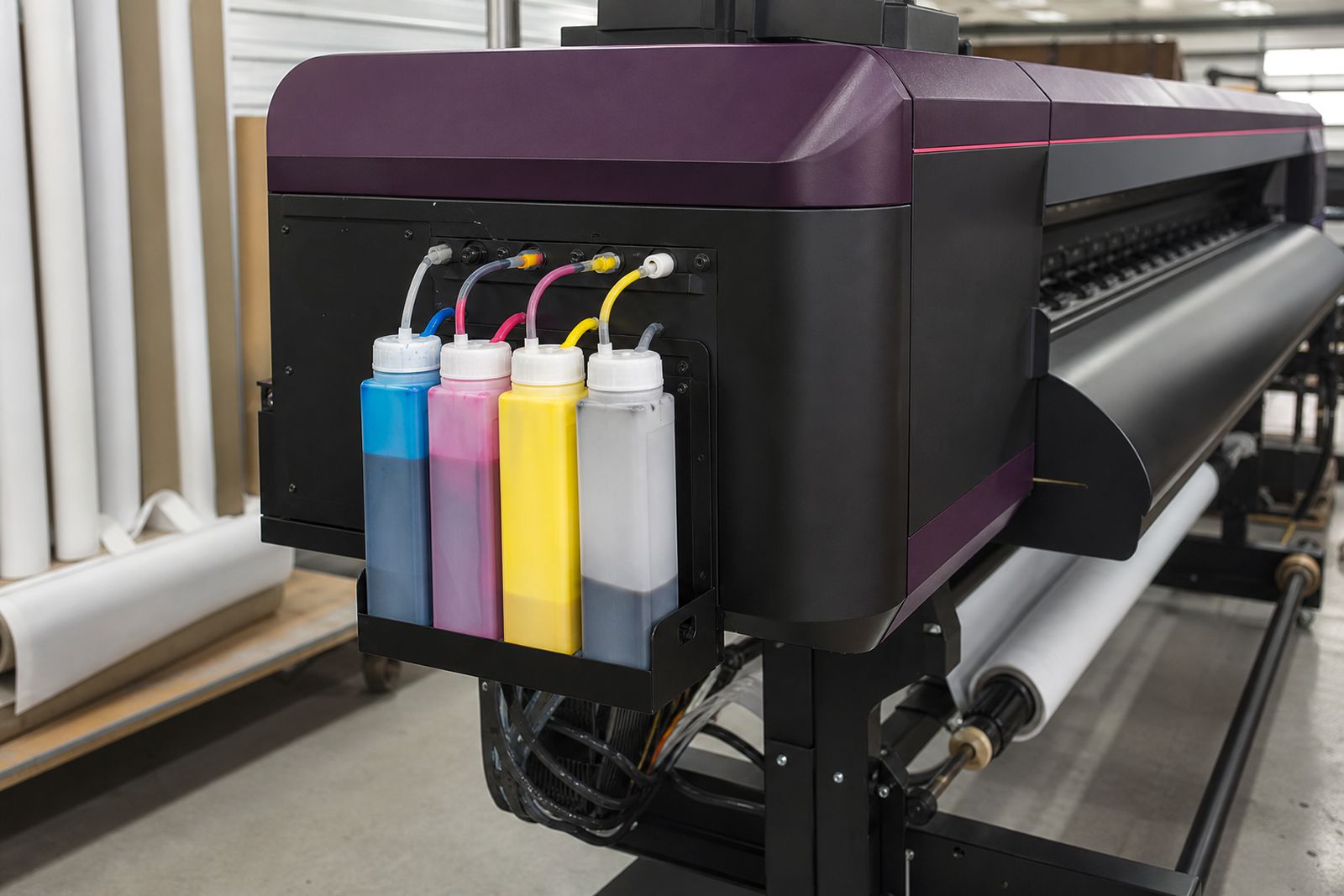
Bulk and cartridge inks can both produce saleable work when the printer is set up properly, but they change how stock is managed and how the machine is serviced. A busy sign shop may prefer bulk feed where long runs are common, while a photographic room often sticks with the cartridge format specified for that platform.
- Bulk suits higher monthly volume and reduces stoppages for cartridge swaps.
- Cartridges keep handling tidy and make colour channel changes more controlled.
- Bulk systems need clean tanks, lines and filters, otherwise contamination creeps in.
- Cartridge systems often cost more per unit of ink, but the printer firmware is usually built tightly around them.
- On some machines, changing supply format is a significant change and may affect pumps, chips, dampers or warranty conditions from the importer.
If a shop is chasing lower running cost, the cheapest ink on paper is not always the cheapest route once head life, cleaning frequency and rejected output are counted. We would rather map the printer and workload first than push a swap that leaves the operator fighting colour drift next week.
Choosing by print process, not by label colour
Eco-solvent, aqueous and UV inks are different categories, even if the printer width and market look similar. Each chemistry behaves differently in the machine and on the substrate, and each has its own cleaning fluids, maintenance routine and drying or curing demands.
- Eco-solvent is common in vinyl graphics, posters and general sign output where flexibility and outdoor use matter.
- Aqueous suits photographic and indoor display work where fine tonal control and paper choice are central.
- UV is used where direct printing, rigid media and instant cured handling are part of the job.
Changing chemistry often involves line flushing, profile changes, different media settings and a fresh look at head condition. In dry Highveld weather one small issue in a neglected ink path shows up fast, especially on lighter channels.
What changing ink type means for your printer
A move from one approved ink set to another can alter droplet behaviour, drying rate, adhesion, odour level and the way colour builds in saturated areas. It may also expose parts that were already near the end of service life. A machine that looked acceptable on the old set can start banding once a new ink asks more from weak dampers or tired heads.
Before any changeover we look at the ink train as a whole: tanks, cartridges, tubing, filters, dampers, capping condition, pump strength and the state of the printheads. That avoids the common problem where a shop blames the new ink for faults that were sitting there already. Profiling also matters, because the old ICC setup rarely carries over neatly.
- Expect a flush and purge procedure before mixed chemistry or mixed generations are introduced.
- Budget for profiling after a meaningful ink change, especially on colour-critical work.
- Check media pairings, because a profile that was stable on one film or paper can shift badly on another.
- Plan the change around production, not halfway through a live campaign run.
Colour, storage and day to day handling
Ink performance depends on storage and handling more than many teams admit. Containers left in heat, half-used stock kept open too long or old cartridges brought back into rotation can all create avoidable waste. In Gauteng, dust control around open bulk systems should be treated as part of print quality and housekeeping.
We recommend clear stock rotation, channel labelling and separation between active ink, cleaning fluids and waste bottles. Small habits on the floor help: wipe around fill points, keep lids sealed and record when a channel started misbehaving instead of guessing later. Those notes often point straight to a blocked filter or a weak seal.
Matching inks with heads, media and software
Ink never works alone. Printheads, RIP settings and the media surface all shape the final result, so this section sits closely with our printheads, media, spares and RIP software pages. If a magenta channel is dropping out, the answer may be ink contamination, but it may just as easily be a head issue or poor waveform settings.
Where required, we can supply ink alongside set-up, colour profiling and print-shop training so the machine is not judged on default settings. That matters when a studio moves from short photo runs to a broader mix of vinyl, film and display media. The printer can often do the work, but only if the ink set and output settings are treated as one system, not separate purchases.
Questions we get asked
Can I change from cartridges to bulk ink on my current printer?
Sometimes, but it depends on how that printer was designed. A conversion can involve tanks, chips, dampers, lines and firmware behaviour, so it needs to be checked model by model before stock is ordered.
Will a new ink set improve colour straight away?
Not on its own. A different ink may have good potential, but proper results usually need cleaning, condition checks and fresh profiling so the RIP matches the actual behaviour of the printer and media.
Do you supply cutting machines, plasma units or laser equipment?
We supply wide-format printers, inks, printheads, media, RIP software, spares, set-up, colour profiling and print-shop training. Cutting machines, plasma units and laser equipment are outside our scope on this site.
Tell us about the job
Send sizes, materials and where you are through our contact form, and we will come back with the practical options.
Open the contact form