
Eco-solvent or UV?
Brochures tend to make both printer types look like they cover everything. The better choice usually shows up when you list the jobs that pay your rent, the media you load every week and the finishing space you actually have.
Start with the work that lands on your floor
Start by looking at the jobs your shop books often enough to justify the ink set, media range and operator routine that go with it.
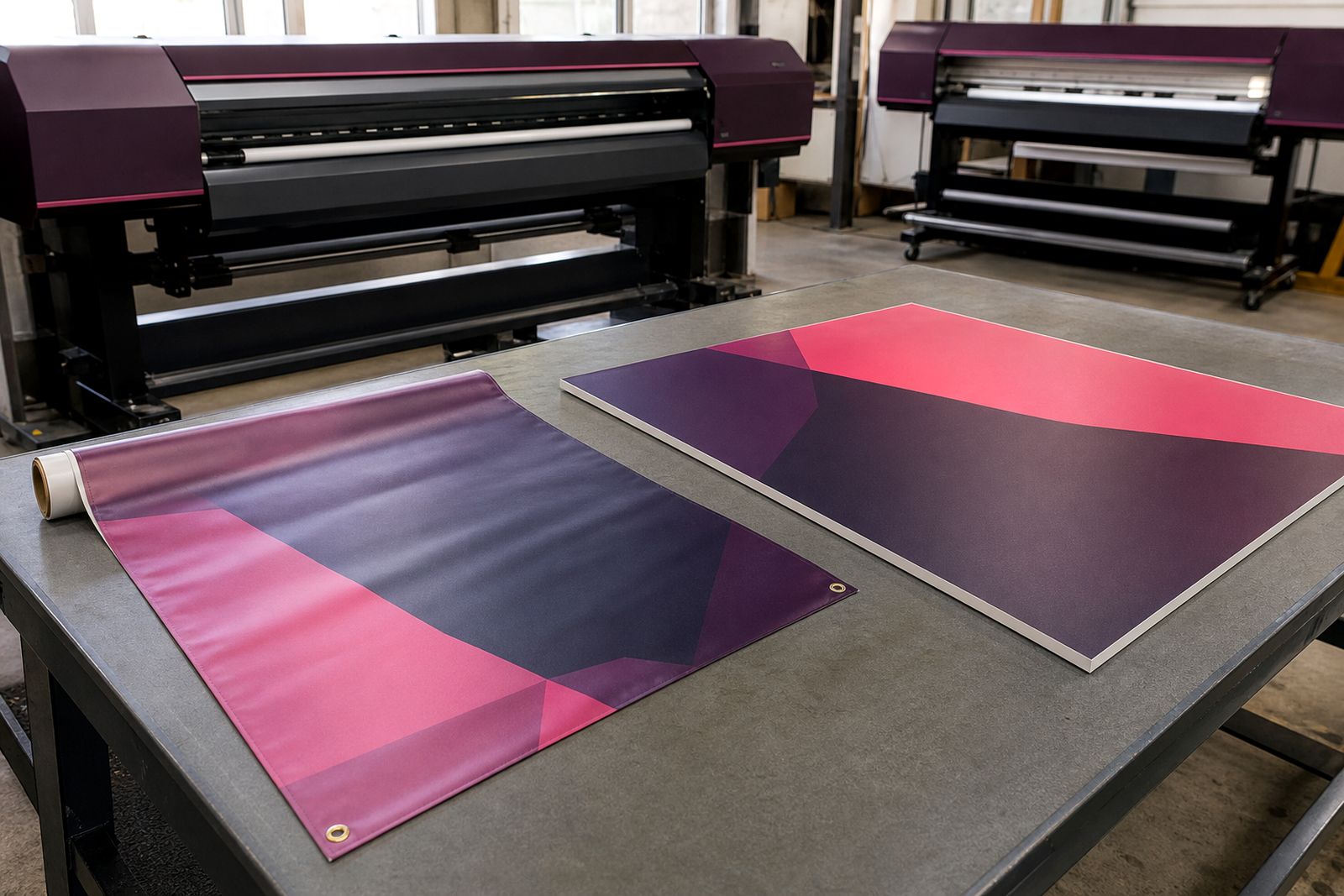
Eco-solvent usually fits sign and display work on flexible roll media. UV opens the door to a wider spread of materials, especially where clients ask for rigid boards, labels, promotional panels or short-run items that need to leave the printer dry.
Write down your last month of billable work, not the work you hope to win later. A real list cuts through sales talk clearly, and it often shows one pattern more than another.
- Vinyl decals, window graphics and pull-up banners point strongly toward eco-solvent.
- Rigid boards, direct-to-substrate jobs and mixed media batches point more often toward UV.
- Photo-heavy indoor prints on coated media may sit better with aqueous, so do not force those jobs into the wrong comparison.
- If most orders are outdoor signage on rolls, keep the decision narrow and practical.
Media matters more than headline speed
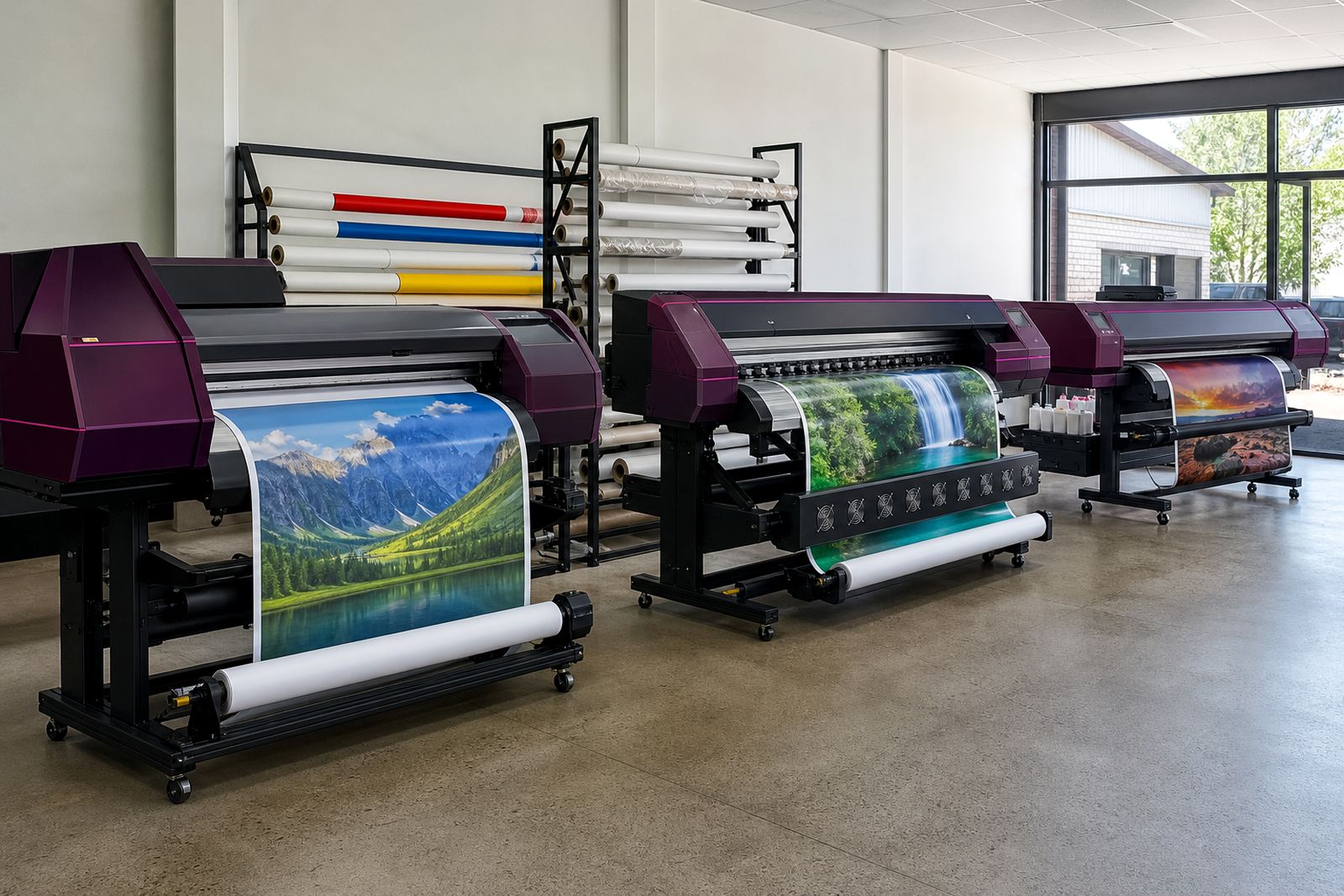
Many buyers compare print speed first, yet the daily friction in a print room usually comes from media handling. If your operators spend hours loading flexible rolls, laminating and trimming, an eco-solvent setup may fit the room well. If you move between boards, films, synthetic stocks and specialist surfaces, UV can reduce the number of workarounds.
Look at what needs to happen after printing. Eco-solvent output often moves into a finishing sequence that can include drying margin, lamination and contour cutting. UV output is generally dry off the machine, which helps on rush board work and certain sticker or packaging-related runs, but substrate behaviour still needs checking before production.
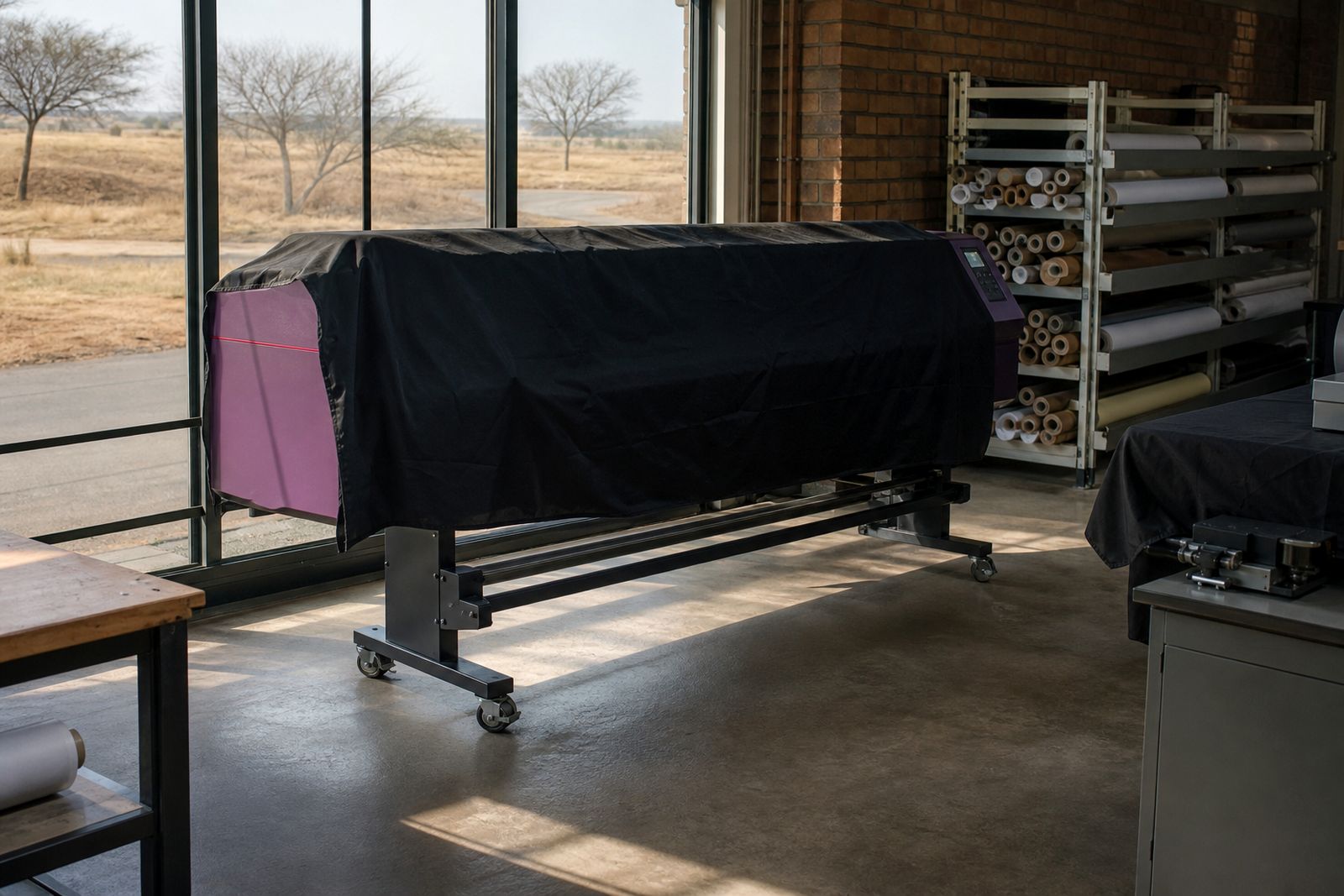
Centurion and the wider Highveld bring dust and dry air into the equation too. Media storage, static control and handling affect head health, panel consistency and operator frustration more than most brochures admit.
Ink behaviour, surface finish and durability
The look of the print matters just as much as the substrate. Eco-solvent ink tends to suit flexible sign media well and can give a familiar finish for decals, posters and general display graphics. UV ink sits differently on the surface, so the feel and sheen can change from one stock to the next.
If your clients inspect close-up decorative work, premium retail graphics or colour-critical panels, ask for tests on the exact media you plan to use. Two printers can both claim wide application range while producing very different surface character. One may be perfect for a construction board and less convincing on a luxury point-of-sale panel.
- Eco-solvent is commonly selected for vehicle decals, signage vinyl and banner media.
- UV is often chosen where dry handling and substrate variety carry more value.
- Gloss, satin and matte behaviour should be tested on your real stock.
- Outdoor life depends on media, lamination choice, installation conditions and the ink family.
Space, ventilation and the real shape of your room
Measure the room around the printer, including loading space, take-up path, board movement, trimming area and the operator lane behind or beside the printer. A setup that looks tidy on paper can be awkward once rolls, boxes and half-used media start stacking up.
Eco-solvent installations often need a sensible view of ventilation and finishing flow, especially where long runs move straight to lamination. UV setups need just as much planning around substrate storage and flat handling if rigid work forms part of the brief. On both types, stable mains power matters because stoppages during printing can waste media and upset colour consistency.
For Gauteng shops this usually comes down to whether the printer will sit in a cramped production room or in a properly laid out print area. Be honest about your floor, your staff count and how prints leave the machine. It is surprising how often that settles the decision.
Daily running costs include more than ink price
Low ink cost per square metre can distract from the full operating picture. Head maintenance, waste ink, media spoilage, test prints, cleaning routines and operator training all belong in the calculation. The cheaper route on paper can become the expensive one if it produces more reprints or more stoppages.
Ask for a working estimate based on the jobs you already know: common banner widths, your standard vinyl stock, board sizes you handle most and the colour density you normally run. That gives a better planning base than a typical coverage figure.
- List your three most common media types and monthly volumes.
- Note whether lamination is routine, occasional or rare.
- Count how often jobs need exact brand colour matching.
- Include spare parts, printheads, cleaning items and RIP software in the ownership picture.
- Factor operator confidence into waste levels during the first production period.
A short decision check before you send an enquiry
If most of your paid work sits on rolls, especially signage vinyl, decals and banners, eco-solvent will usually remain the straightforward fit. If your order book keeps stretching across boards, speciality surfaces and dry-to-handle output, UV deserves the front seat in the discussion.
Where the split is close, ask for guidance around workflow rather than a sales comparison. Set-up, colour profiling and training often matter as much as the machine category because they determine whether the printer settles into the shop properly.
When you use our contact form, include your main job types, media widths, monthly output and whether you need roll-to-roll only or broader substrate capability. That gives us enough to point you toward the printer class, inks, RIP software and accessories that match the work you actually bill for.
Questions we get asked
Is UV always better because it prints on more materials?
UV suits a wider material range, but if your income mostly comes from flexible roll media such as vinyl and banners, eco-solvent can be the cleaner fit for the work pattern and finishing flow you already run.
Can one shop run both eco-solvent and UV?
Many print rooms split work that way. Eco-solvent covers core roll signage well, while UV takes care of broader substrate demands or jobs that need dry handling off the machine.
Should I decide by print speed alone?
Print speed figures matter less than media mix, drying and finishing steps, operator routine, room layout and the cost of waste on typical daily jobs.
Also worth a look
Tell us about the job
Send sizes, materials and where you are through our contact form, and we will come back with the practical options.
Open the contact form