
UV printers
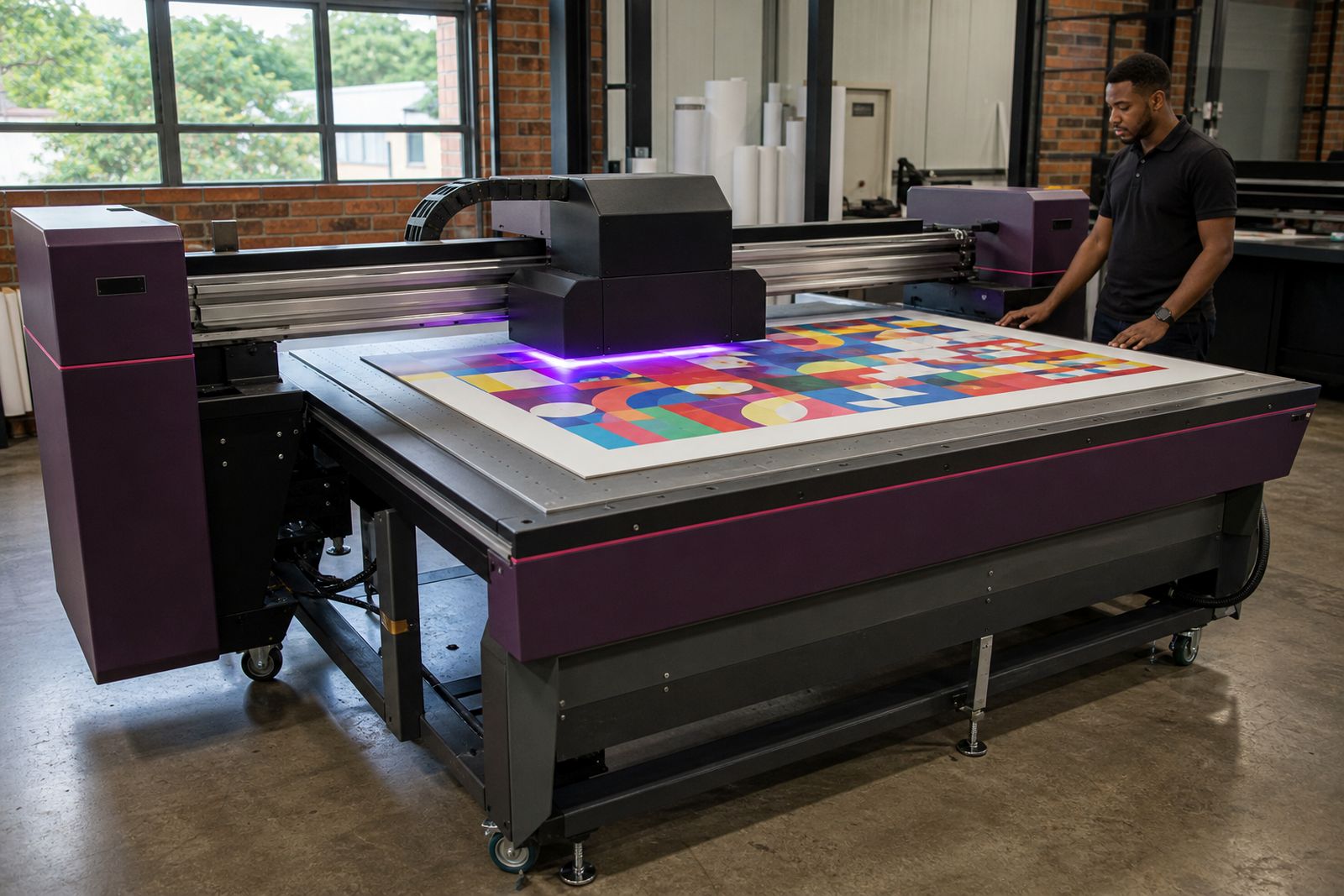
UV printers cure ink with lamp output at the carriage, allowing direct print onto rigid boards and selected roll media. For sign shops, decor work and short-run packaging in Gauteng and beyond, they open jobs that solvent and aqueous machines do not handle well.
Where UV printing fits on a real production floor
UV printing is used where the job needs direct print onto sheet material, good ink hold-out on non-porous surfaces, and fast handling after print. In a sign shop that often means foam board, PVC board, acrylic, correx, aluminium composite and coated wood panels. In decor work it can mean wall panels, cabinet faces, sample boards and small furniture parts. For packaging studios it suits mock-ups, short runs of sleeves, cartons and display pieces where cutting and creasing happen after print.
Compared with eco-solvent, UV is usually the better route when you want to avoid mounting a print onto a rigid panel. Compared with aqueous, it has a broader reach on plastics and coated boards. Other printer types still suit very high volume flexible banner work, deep fabric penetration and fine art photo output on specialised papers.
- Best suited to rigid display boards and smooth coated sheets.
- Useful for white ink layers, spot varnish and texture effects on selected models.
- Good for short-run packaging prototypes and presentation samples.
- Less suitable for heavy cutting dust areas, unstable temperatures or rough untreated timber.
Roll and flatbed formats, and the limits that matter
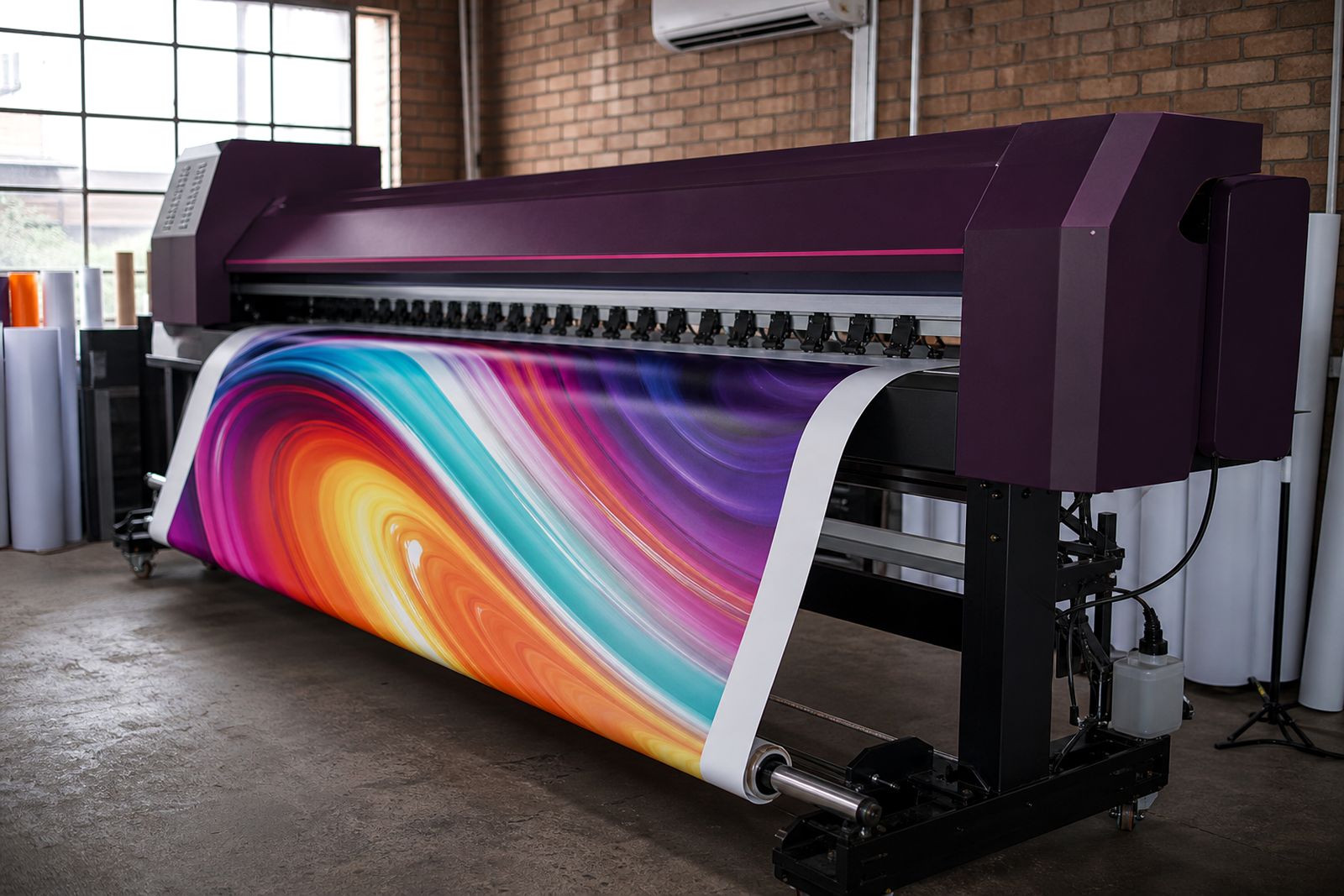
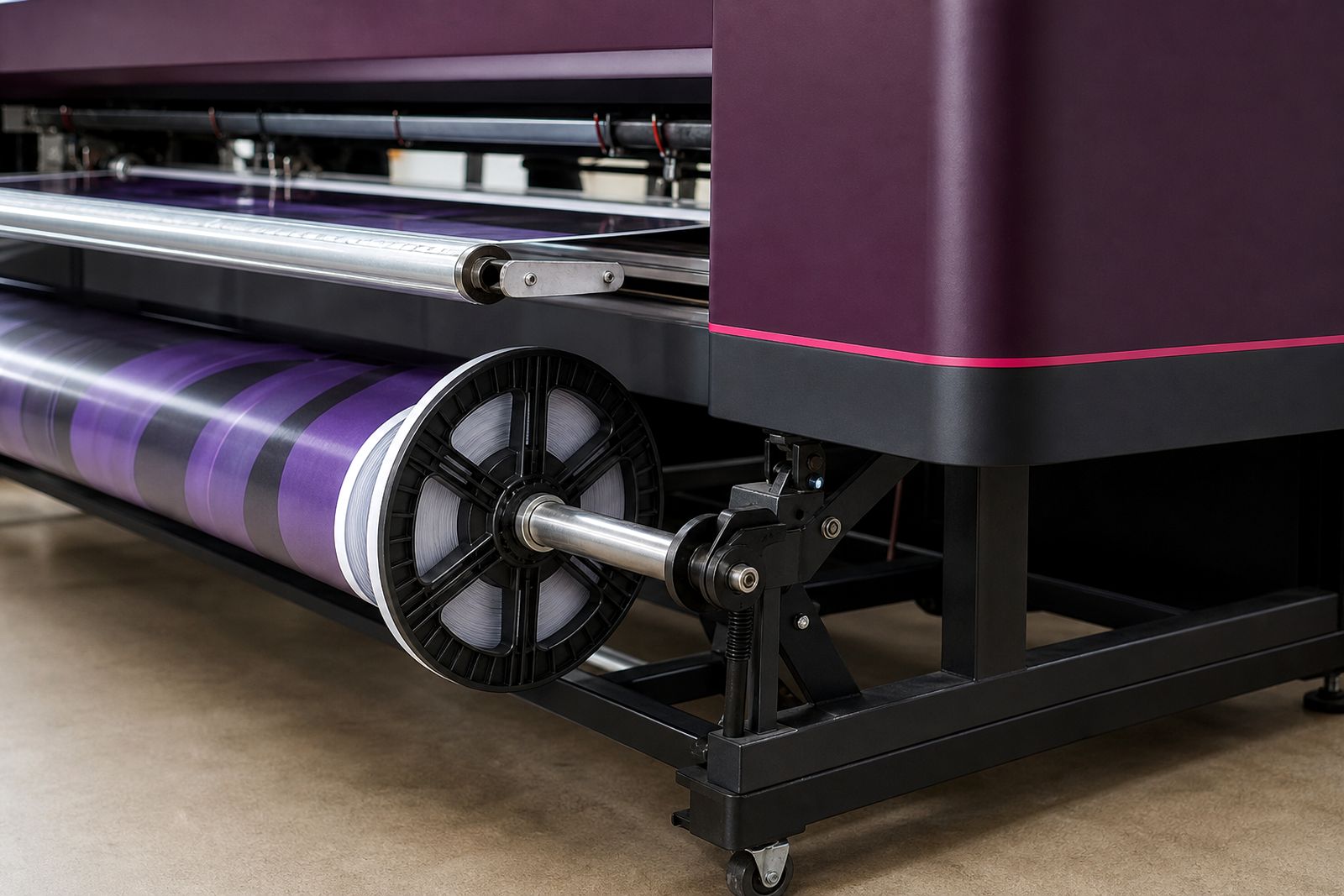
The first decision is format. Roll UV printers are built for flexible media such as self-adhesive vinyl, film, wallpaper stock, backlit material and selected synthetic papers. Flatbeds are built for sheet stock and rigid boards. Hybrid layouts combine a conveyor bed with roll feed and can suit mixed work where floor space is tight.
Working width and bed size matter more than brochure claims. A 1.6 metre or 1.8 metre roll machine suits most indoor display work and label panels. A 2.5 metre class flatbed covers full board production for many sign studios. For doors, larger décor panels or packaging sheets with nested layouts, bed length and true printable area are key figures alongside the headline machine size.
- Typical roll widths: 1.6 m, 1.8 m and 3.2 m.
- Typical flatbed printable beds: 1.3 x 2.5 m and 2.0 x 3.0 m.
- Common media thickness range on flatbeds: up to 50 mm, depending on carriage clearance and vacuum table design.
- Resolution classes often quoted: from 600 x 900 dpi up to 1 200 x 1 200 dpi.
- White and varnish channels add application range but they slow print speed and need more disciplined maintenance.
If your work includes warped boards or hand-cut stock, head height tolerance is important. UV heads sit close to the surface, so sheet flatness cannot be treated casually.
Materials that print well, and jobs better sent elsewhere
Stable, smooth and reasonably flat media gives the most consistent result. PVC foam board, acrylic with correct surface prep, coated card, PET films, aluminium composite and many pre-finished décor panels all work well when profile, lamp setting and carriage height are matched to the stock. Correx can print cleanly for campaign signage, although flute direction and static need attention. Small packaging runs can look very good on coated carton and synthetic board.
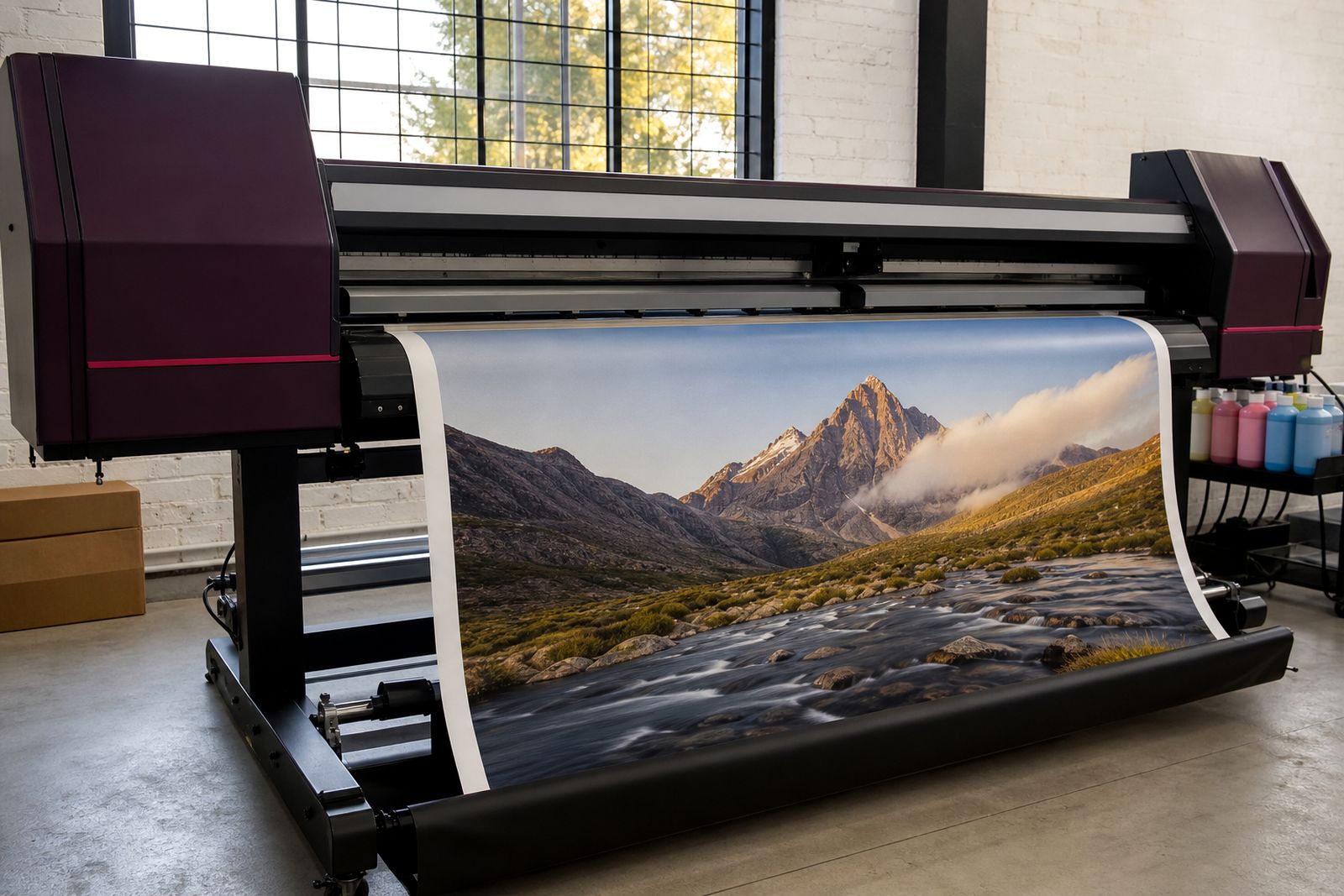
There are also jobs that do not justify a UV printer. Deeply textured natural timber, oily surfaces, strongly curved objects and heavily bowed board tend to create ink adhesion or head-strike problems. Outdoor applications that will be folded hard or stretched around tight curves may need a different ink set or a different print process entirely. For photo labs chasing the widest tonal range on cotton or baryta papers, aqueous still leads.
When a customer brings in an unusual panel, we would rather know the exact stock than guess from a photo. Thickness, coating type and finish level matter a lot.
Site preparation in Centurion and around Gauteng
UV printers need a clean room, stable mains power and sensible board handling space. In Centurion and across Gauteng, dust is often the hidden cost. Fine Highveld dust settles on rails, encoder surfaces, sheets and lamp housings, and that can show up as banding, misfires or random surface contamination. A machine placed next to a cutting table or board saw will need more frequent cleaning and stricter room discipline.
Floor loading should be checked for larger flatbeds. Plan enough room for sheet paths at the infeed and outfeed sides as well as the machine footprint. Ventilation matters because cured UV output is clean to handle, but printing still benefits from controlled airflow and operator comfort. Mains protection is worth budgeting for because lamp systems, vacuum blowers and carriage electronics do not enjoy erratic supply.
- Allow clear sheet-handling space around the bed, especially for 2.5 metre and 3.0 metre formats.
- Keep the room temperature fairly stable for ink behaviour and repeatable colour.
- Plan a low-dust workflow away from routing, sanding and saw cutting.
- Check door widths and turning space before delivery of larger frames.
Daily care, lamps, heads and colour control
UV printers reward routine. The operator should wipe where the manufacturer intends, keep capping and cleaning stations in order, and run nozzle checks before production shifts. White ink systems need extra attention because pigment settlement is real, especially if the machine stands for stretches between jobs. Lamp output also changes over time, so print mode and curing settings should be reviewed when surface finish or adhesion starts to drift.
Printhead care also includes dust on the board, static on synthetic stock and poor sheet flatness, all of which shorten head life. Colour profiling matters once the machine is stable and the shop has settled on its main materials. A profile built for one PVC board will not always hold on another, even when both look similar under workshop lights.
- Run nozzle checks at the start of each production day.
- Store inks to suit the room conditions recommended for the ink set.
- Keep spare wipers, maintenance fluid and approved cleaning swabs on hand.
- Review profiles when you change media batch, lamp setting or print mode.
What to send when you ask about a UV printer
A useful enquiry starts with the actual work. Tell us whether you print boards, roll media or both. Include your common sheet sizes, thickest material, expected daily square metres and whether white ink or varnish is required. If the machine will be placed upstairs, in a narrow shopfront, or in a shared room with cutters and laminators, mention that early.
It also helps to know whether your team needs operator training, colour profiling and first-install media guidance. Some studios already run RIP software and want a machine that fits the current workflow. Others need the full chain from install to calibration.
- Machine type wanted: roll, flatbed or hybrid.
- Main materials and their thicknesses.
- Largest board or roll width you plan to print.
- Need for white ink, varnish or layered effects.
- Expected production volume and typical job mix.
- Your town, access limits and room conditions.
Use our contact form with those details and we can match the printer, ink configuration and support scope to the work on your floor.
What our Wide-format Printing customers say
Verified Google reviews
Questions we get asked
Can UV printers handle both boards and roll media?
Some UV printers handle both boards and roll media. Flatbeds are best for rigid sheets, roll machines for flexible media, and hybrid layouts cover a mixed workload with some trade-offs in speed and footprint.
Is white ink necessary?
White ink is useful when your work needs print on clear, dark or metallic media, or layered effects for packaging and decor samples. For standard CMYK jobs on white board, it may not be worth the added maintenance.
Do UV prints need lamination?
Many indoor rigid prints are used without lamination. Outdoor life, scratch exposure and the surface you print onto will decide whether extra protection is needed.
Also worth a look
Tell us about the job
Send sizes, materials and where you are through our contact form, and we will come back with the practical options.
Open the contact form